
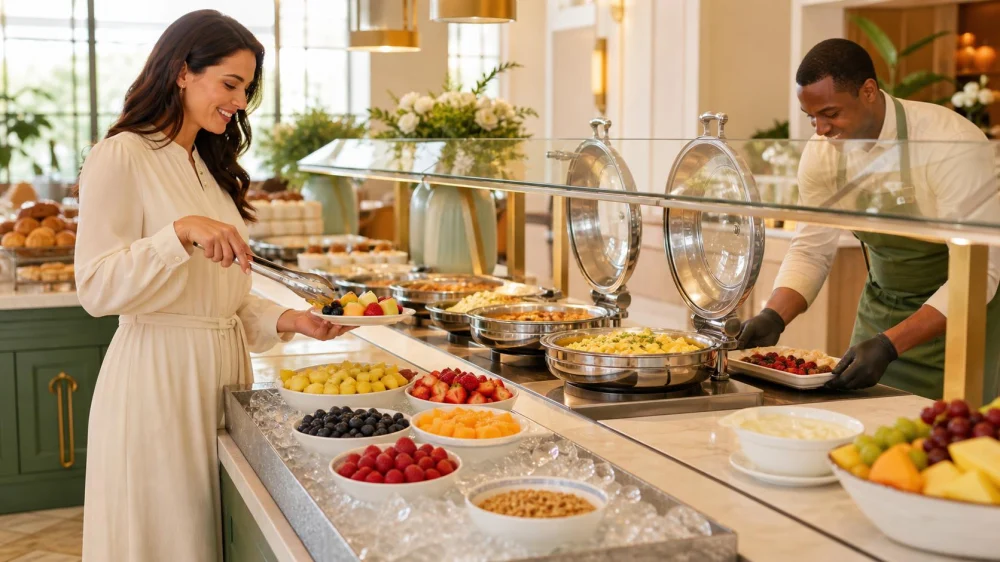
Brunch Buffet Food Safety: Choose Fresh, Hot, Cold, and Well-Handled Dishes
Quick answer: At a brunch buffet, choose hot food that is actively held hot and cold food that is kept refrigerated or on ice. Prefer small, frequently replaced trays, use the utensil assigned to each dish, take a clean plate for every trip, and skip food that looks lukewarm, dried out, repeatedly handled, or contaminated by another utensil. Ask staff when uncertain.
1. Look for Clean, Attended, Organized Service
Before filling a plate, check whether staff monitor the line, surfaces look clean, serving utensils have handles clear of food, sneeze guards are positioned, and spills are addressed. A crowded, unattended station increases opportunities for cross-contact and poor handling.
Notice whether hot and cold foods have distinct holding equipment. Decorative bowls alone do not control temperature. When in doubt, ask when a dish was placed out or request a fresh portion.

2. Select Hot Food From Active Hot-Holding Equipment
Chafing dishes, warming trays, and other equipment should be operating, not merely serving as decoration. Steam is not a perfect safety measure, but food that is clearly lukewarm or sitting in an unheated pan is a reason to choose something else and alert staff.
FDA consumer buffet guidance says hot foods should be kept at 140°F or warmer. Diners generally cannot verify every temperature, so choose well-maintained stations with frequent staff checks.

3. Choose Cold Foods That Are Refrigerated or Nested in Ice
Yogurt, cut fruit, smoked fish, dairy, salads, cold meats, and similar perishables should feel properly chilled and sit in refrigerated service or pans surrounded by ice. Ice should support the food container, not merely decorate the table.
FDA guidance recommends 40°F or colder for cold buffet food. Skip dishes that appear warm, separated, wilted, or left beyond the chilled area.
4. Prefer Small Trays That Staff Replace, Not Top Off
Fresh small batches spend less time on display. FDA advises replacing nearly empty dishes with newly filled ones instead of adding new food to old food. Topping off can mix fresh food with portions that have been handled and held longer.
If a tray is crusted at the edges, nearly empty, or surrounded by spills, wait for replacement. Do not scrape the bottom just because it is the last portion.
5. Keep Serving Utensils With Their Assigned Dishes
Use the spoon, tongs, or ladle provided for one dish and return it to the correct holder. Do not use your hands, personal fork, or a utensil from another tray. Tell staff if a utensil falls, becomes submerged, or is moved between foods.
This matters for both general hygiene and allergen cross-contact. Keep utensil handles out of food and avoid touching food you will not take.
6. Use a Fresh Plate for Every Return to the Line
Do not bring a used plate back to serving dishes. Saliva and food residue can transfer from the plate to shared utensils. Take a clean plate and leave used dishes at the table for staff.
Supervise children at the line or let an adult serve them. Keep fingers, hair, clothing, and personal items away from food and utensils.
7. Choose Egg Dishes That Are Freshly Cooked and Properly Held
Scrambled eggs, quiche, casseroles, hollandaise, and other egg-based foods require careful temperature control. Choose steaming, replenished pans or made-to-order items from a clean station. Avoid pooled egg that looks cool or has sat untouched.
For made-to-order eggs, higher-risk diners should ask about fully cooked options. Restaurant policies and local food codes apply; staff can explain preparation.
8. Do Not Rely on Appearance for Food-Allergy Safety
Buffets create frequent cross-contact through shared utensils, spills, mislabeled dishes, and guests. Speak with a manager before eating, identify the allergen clearly, and ask whether a separately prepared meal is possible. A label does not guarantee that a shared line is safe.
Carry prescribed emergency medication and follow your medical plan. If staff cannot answer confidently, choose another option rather than taking a chance.
9. Use Added Caution During Pregnancy or Reduced Immunity
Pregnant people, young children, older adults, and people with weakened immune systems face higher risk from some foodborne illnesses. Favor fully cooked food served promptly and avoid higher-risk raw or undercooked items according to healthcare guidance.
When the line's time or temperature control is unclear, made-to-order food may be a better choice. Ask a healthcare professional for personalized restrictions.
10. Refrigerate Take-Home Perishables Promptly
Ask whether the restaurant allows buffet food to be taken away. If it does, use a clean container and go directly to refrigeration. USDA's buffet guidance uses a two-hour limit at room temperature, reduced to one hour above 90°F.
Time already spent on the buffet counts. If you cannot know how long a perishable dish has been out or keep it safely cold during travel, leave it behind. When in doubt, throw it out.


 Taqueria y paleteria michuacana0.0 (0 reviews)
 Sanmiwago0.0 (0 reviews)
 Downtown Yummy4.0 (112 reviews)
 Popeyes Louisiana Kitchen3.0 (821 reviews)
 Saltgrass Steak House4.0 (1097 reviews)
 Wings N Go4.0 (424 reviews)
 How to Order the Perfect Brunch Flight of Drinks
 Best Indian Curry Houses in Major US Cities
 Restaurant Reviews Every Food Lover Should Know: Ultimate Guide to Dining Out
 Best Mediterranean Restaurants With Shared Plates
 Dining Experiences Foodies Can’t Stop Talking About: Top Trends and Must-Visit Spots
 Best Middle Eastern Salads and Mezze Menus