
Restaurant Soup Guide: Broth, Bisque, Chowder, or Stew?
On this page
Quick answer
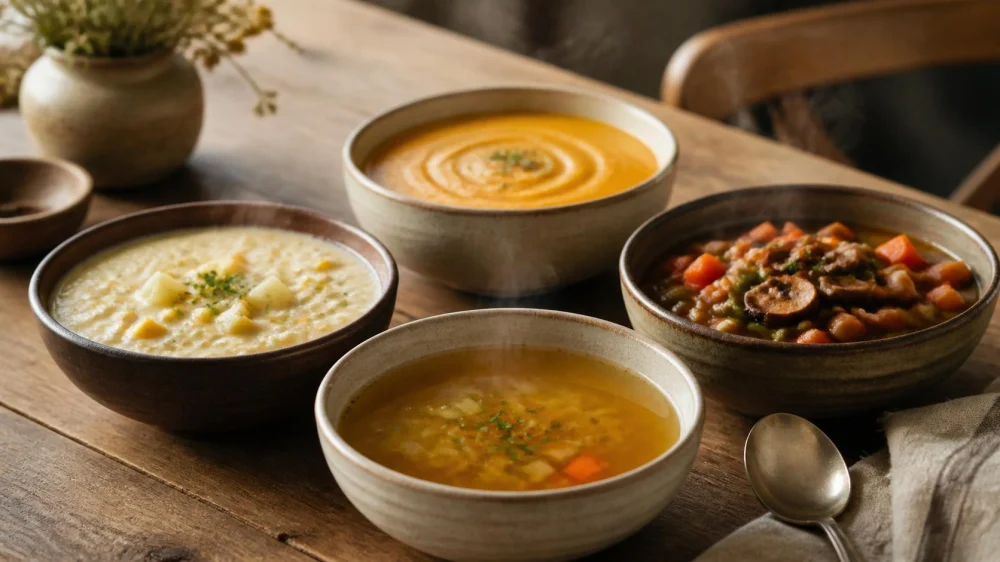
Choose broth or a clear soup for a lighter, liquid-forward bowl; a puréed or cream soup for a smooth texture; bisque for a rich, finely blended style; chowder for a thick soup with noticeable pieces; and stew for a substantial dish with less free liquid and larger ingredients. These names describe tendencies, not universal recipes. Read the ingredients and ask about dairy, shellfish, meat stock, thickeners, garnishes, portion size, and spice level before ordering.
This guide explains common US restaurant menu usage. Regional traditions and individual chefs use the terms differently, so the restaurant’s description is more reliable than the category name alone. Anyone with a food allergy, celiac disease, or medically required diet should ask the restaurant about ingredients and cross-contact.
Bourbon Steak by Michael Mina
New YorkNew York CountyNew York
160 Central Park S, New York, NY 10019, USA
Read the menu description first
Start with the named ingredients, cooking style, and garnish. “Roasted tomato soup with basil oil and grilled cheese croutons” tells you more than “soup of the day.” Look for words such as clear, creamy, puréed, chunky, spicy, smoked, coconut, seafood, or slow-braised.
Then check the portion: cup, bowl, starter, side, or entrée. A small bisque may be richer than a large broth, while a chowder or stew with bread can function as a full meal. Ask whether bread, crackers, rice, noodles, cheese, sour cream, oil, or herbs arrive automatically.

Broth and clear soup
Broth is a savory cooking liquid made by simmering ingredients such as vegetables, meat, bones, seafood, herbs, or aromatics. A broth-based soup keeps that liquid visible and may contain noodles, grains, vegetables, dumplings, meat, or tofu.
Choose broth when you want a lighter mouthfeel, distinct ingredients, or a starter that does not rely on cream. However, clear does not mean vegetarian, low-sodium, allergen-free, or low-fat. Meat stock, fish sauce, soy, dairy, egg noodles, wheat-based dumplings, or concentrated seasoning may be present even when the liquid looks simple.
Puréed and cream soups
Puréed soups blend some or all of their cooked ingredients into the liquid. Squash, carrot, pea, potato, mushroom, and tomato are common bases. Texture can range from lightly blended to completely smooth.
“Cream soup” often signals dairy, but a smooth soup can also gain body from potatoes, beans, rice, bread, nuts, coconut milk, or emulsified vegetables. Conversely, a puréed vegetable soup may still contain butter, cream, chicken stock, or a dairy garnish. Ask rather than inferring the recipe from appearance.
Bisque
Bisque traditionally refers to a smooth, rich soup associated with shellfish, but modern restaurant menus also use the word for creamy tomato, squash, mushroom, and other blended soups. Expect a fine texture and concentrated flavor, often with dairy, butter, stock, wine, or a thickener.
Choose bisque when you want a small, rich starter or a smooth bowl without large pieces. It is not ideal when you want a clear, light soup or need to avoid ingredients that commonly build richness. For shellfish allergy, do not assume a vegetable-named bisque is made in a separate pot or without seafood stock; ask about the complete recipe and kitchen process.
Chowder
Chowder is generally a hearty, thick soup with visible pieces. Seafood, corn, potatoes, onions, bacon, and other vegetables are common, but styles vary. New England-style clam chowder is typically pale and creamy, while Manhattan-style clam chowder is commonly tomato-based.
Choose chowder when you want a filling texture and ingredients you can identify in each spoonful. Ask whether bacon, pork, shellfish stock, dairy, flour, or crackers are included. Tomato-based does not automatically mean vegetarian or free from shellfish.
Stew and soup-stew boundaries
Stew is a slowly cooked dish in which solid ingredients are served with a smaller amount of thick cooking liquid. Pieces are often larger and the result is commonly hearty enough to be an entrée. Beef stew, vegetable stew, gumbo, chili, and braised bean dishes may sit near the boundary between soup and stew.
There is no single liquid-to-solid ratio that every restaurant follows. Use the menu’s description, photograph when reliable, or a server’s explanation to learn whether the dish is spoonable, sauce-like, served over a starch, or accompanied by bread.
Choose by texture and meal role
| If you want… | Start with… | Confirm… |
|---|---|---|
| A lighter starter | Clear or broth-based soup | Stock base, noodles, and garnish |
| A smooth, comforting bowl | Puréed soup or bisque | Dairy, nuts, stock, and thickness |
| Visible pieces and rich body | Chowder | Seafood, pork, dairy, and flour |
| A main-course portion | Stew or hearty chowder | Serving size, starch, and sides |
| A plant-forward option | Vegetable broth or purée | Meat stock, butter, cream, and garnish |
Balance the rest of the meal. A rich bisque may pair well with a crisp salad, while a light broth can precede a substantial sandwich. If soup is the main dish, check whether it includes enough vegetables, grains, beans, seafood, or meat to match your appetite.
Questions worth asking
- Is the base meat, seafood, or vegetable stock?
- Does it contain cream, milk, butter, cheese, coconut, or nuts?
- Is flour, bread, pasta, barley, or another thickener used?
- Are shellfish, fish sauce, bacon, or pork part of the base?
- How spicy is it, and can the heat be adjusted?
- Is the garnish already mixed in or removable?
- Is the listed portion a cup, bowl, starter, or entrée?
- Is today’s soup prepared in a shared pot or with shared utensils?
Ask the highest-priority question first. A server can check with the kitchen, but substitutions may not be possible for a soup prepared earlier in a large batch.
Soup-order checklist
- Choose liquid-forward, smooth, chunky, or stew-like texture.
- Decide whether the soup is a starter, side, or full meal.
- Read the base, main ingredients, and garnish.
- Ask about hidden dairy, meat stock, shellfish, gluten sources, and nuts when relevant.
- Confirm portion size and included bread or crackers.
- Check spice level and whether adjustments are possible.
- For takeout, ask whether crisp garnishes can be packed separately.
Frequently asked questions
Is bisque always made with shellfish?
No. Traditional usage is closely associated with shellfish, but many modern menus use “bisque” for smooth, rich vegetable soups. People with shellfish allergy should still ask about the stock and shared preparation.
Is chowder always creamy?
No. Some well-known chowders are cream-based, while others use tomato or a clearer base. Chowder generally suggests a thick, hearty soup with pieces, but recipes vary.
Does vegetable soup mean vegetarian?
Not necessarily. It may be made with chicken, beef, or seafood stock or finished with dairy. Ask whether every component, including garnish, fits your needs.
What travels best for takeout?
Smooth soups and stews often travel neatly in a well-sealed container. Request bread, crackers, herbs, croutons, and other crisp garnishes separately so they retain texture.
Sources and evidence notes
The definitions here reflect common English-language culinary and US restaurant usage rather than legal standards. Regional soups often cross the boundaries between broth, purée, bisque, chowder, and stew. Ingredient and allergy notes are therefore framed as questions for the restaurant, not claims about a dish based only on its name.
Conclusion and next steps
Use broth, purée, bisque, chowder, and stew as texture clues rather than fixed recipes. Read the ingredient description, decide whether the bowl is a starter or meal, and confirm the base, thickeners, dairy, shellfish, meat, garnish, and portion. One clear question to the server can prevent a disappointing texture or an ingredient assumption the menu name cannot answer.

 P. King Authentic Chinese Food3.0 (112 reviews)
 Mi Yaad Jamaican Restaurant4.0 (117 reviews)
 Pret A Manger3.0 (206 reviews)
 Marcella's4.0 (2253 reviews)
 Lahori Kabab3.0 (381 reviews)
 La Rola4.0 (211 reviews)
 How to Find Dining Experiences That Will Keep You Coming Back
 Vegan Restaurants That Will Make You Fall in Love with Food
 Discover the Best Hidden Gem Dining Experiences Across the US
 Dessert Spots That Will Make You Fall in Love with Food
 Best Sushi Spots With Signature Rolls You Must Try
 Your Ultimate Guide to Fine Dining