
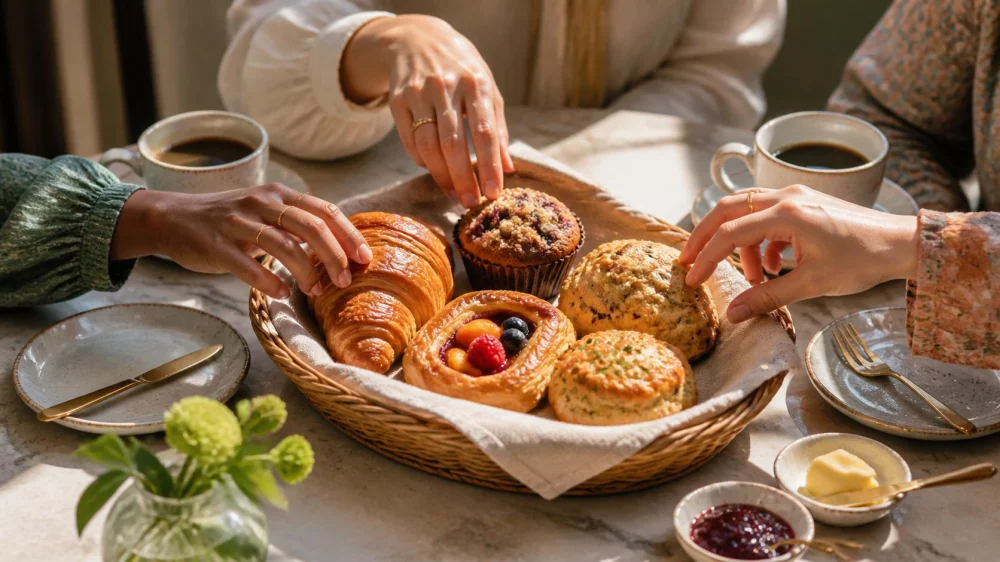
Brunch Pastry Basket Guide: Choose Variety, Freshness, and Portions
On this page
Quick answer
Order a brunch pastry basket by asking how many pieces it includes, whether they are full-size or mini, what is fixed versus selectable, when they were baked, how they are warmed, and which spreads are included. For a group, choose contrasting textures and sweetness levels, confirm allergens directly, and size the basket as a shared starter rather than assuming one piece per person.
A basket labeled “assorted” may vary by day, so treat the current server description as the real menu.

Read the menu description
Look for the piece count, portion size, pastry list, daily-selection language, house-made or supplied status, warming method, and included butter, jam, cream, or honey. Ask whether substitutions cost extra and whether the price changes with the day’s mix.
Clarify names that can describe different products. A croissant may be plain, filled, or topped; a Danish may contain cheese, fruit, nuts, or glaze; a scone may be sweet or savory; a muffin may be standard or oversized. If the basket is intended as breakfast for one rather than a table starter, ask for total size rather than relying on the word “basket.”
Build the mix
- Choose one flaky item, such as a croissant or laminated pastry.
- Add one tender or crumbly item, such as a muffin, biscuit, or scone.
- Balance a sweeter option with a plain or savory option.
- Avoid repeating the same filling across several pieces unless the group wants it.
- Ask for spreads on the side so guests can control sweetness and texture.
- For a large party, consider two smaller assortments so food is reachable and preferences can be separated.
Pair the basket with the rest of the order. Rich pastries may be best beside fruit, eggs, or a lighter entrée, while a small plain basket can accompany coffee without becoming the entire meal. “More variety” is not useful if half the table cannot eat it.
Check freshness and service
A good pastry should match its style: laminated layers should remain distinct, a scone or biscuit should not be gummy, and a muffin should not be wet or stale. Warmth can improve aroma, but overheating can melt fillings, harden edges, or hide age. Ask whether items are warmed to order and request no warming if the group prefers the original texture.
When the basket arrives, confirm the assortment before everyone starts sharing. Request clean serving utensils if pastries are sticky or filled. For allergy or dietary needs, ask about ingredients and cross-contact through the restaurant’s process; visual separation or a server’s guess is not enough.
Share and take away
Use a clean knife or serving tongs rather than tearing every piece by hand. Cut larger pastries into halves or quarters so guests can sample without overordering. Keep spreads with their own utensils and avoid moving knives between nut, dairy, and fruit containers when cross-contact matters.
If pastries remain, ask for a suitable container soon instead of leaving them at the table through the full meal. Note fillings that may need refrigeration and follow the restaurant’s storage advice. Texture will change in transit; keep crisp and moist items separate when practical, and do not reheat packaging unless it is explicitly designed for that use.
Ordering checklist
- Piece count and full-size or mini portions confirmed
- Fixed items and daily substitutions identified
- Sweet, plain, savory, flaky, and tender balance chosen
- Warming method and spreads confirmed
- Allergy and dietary questions handled directly
- Basket size matched to the rest of the meal
- Clean sharing utensils requested
- Takeaway storage for filled items clarified
Limitations
Pastry size, recipes, names, production timing, and availability vary by bakery and restaurant. Freshness cannot be determined from a menu photo. Ingredient and cross-contact information must come from the current restaurant process, especially when an allergy or medical diet is involved.
FAQ
How many pastries should we order?
Ask the actual piece size and compare with the full meal. For sharing, cut larger items and add only if the group wants more.
Are pastries better warmed?
Some are, but not all fillings and glazes handle heat well. Ask how the restaurant serves each item.
Can I choose every pastry?
It depends on the menu and daily supply. Confirm which items are fixed, selectable, or substituted.
Is a plain-looking pastry allergy-safe?
No. Ingredients and cross-contact are not visible. Use the restaurant’s allergy process.
Can I take the basket home?
Usually leftovers can be packed, but ask how filled pastries should be stored and when they should be eaten.
Evidence notes
The practical evidence for a pastry order is the current piece count, production and warming method, ingredient information, and the actual group order. Texture expectations come from pastry style, but they are not proof of freshness or recipe. Direct restaurant confirmation is the decision source when daily assortments change.
Conclusion
A strong pastry basket is not simply the largest assortment. Confirm the size and day’s selection, balance texture and sweetness, fit it to the rest of brunch, and share with clean utensils and a storage plan.



 Living Spaces Café2.0 (1 reviews)
 Taco Nazo (Taco Truck)4.0 (312 reviews)
 Turntable Chicken Jazz4.0 (2246 reviews)
 A to Z Rooftop on Fifth4.0 (126 reviews)
 Red Robin Gourmet Burgers and Brews4.0 (2173 reviews)
 Curry N Wok4.0 (213 reviews)
 Street Food That Are Loved by Locals: Discover Popular Local Street Foods Around the World
 Best Mediterranean Restaurants With Tasting Menus: An Unforgettable Culinary Journey
 Restaurant Reviews: Essential Tips, Current Trends, and Hidden Secrets for Food Lovers
 Breakfast Burrito Guide: Tortilla, Fillings, Sauce, and Travel
 Your Ultimate Guide to Food Trends: What's Hot in 2026
 Restaurant Reservation Deposit: Check the Cancellation Terms Before You Book