
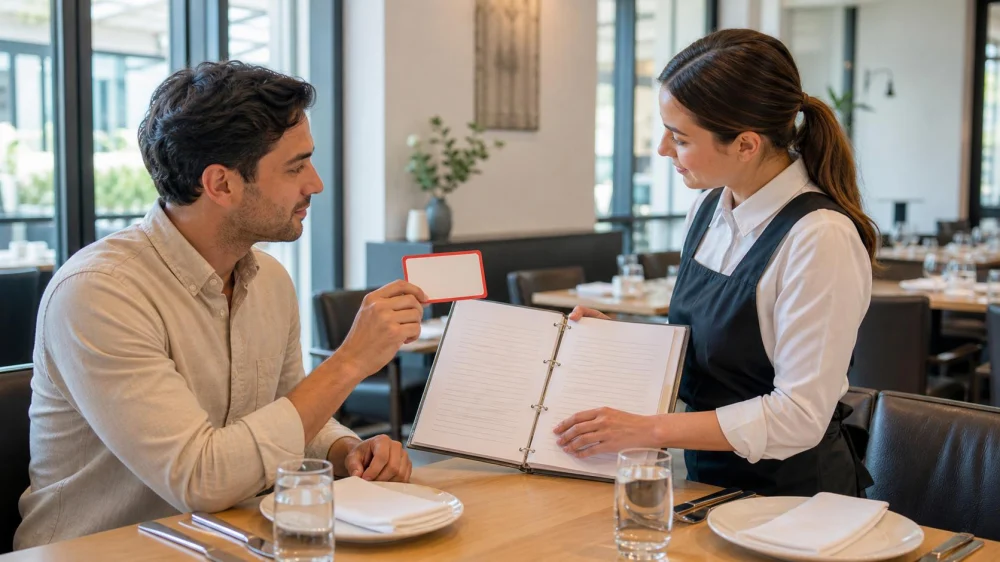
Restaurant Food Allergy: Ask, Confirm, and Recheck
On this page
- Quick answer
- Call before you go
- Name the allergen and the risk clearly
- Ask process questions, not just ingredient questions
- Repeat the conversation on arrival
- Recheck before the first bite
- Be ready for an allergic reaction
- Understand the limits of restaurant assurances
- Dining-out allergy checklist
- Frequently asked questions
- Sources and evidence notes
- Conclusion and next steps
Quick answer
For a medically diagnosed food allergy, contact the restaurant before visiting, name the exact allergen, and ask whether a manager or trained employee can review ingredients and cross-contact controls. At the restaurant, repeat the allergy when ordering and ask that it be communicated to the kitchen. Reconfirm the plate when it arrives before taking a bite.
Carry prescribed epinephrine and your emergency plan. If symptoms begin, follow that plan immediately; use epinephrine as prescribed and call 911 when directed. Do not wait for a restaurant employee to decide whether the reaction is serious.
Call before you go
Choose a quiet time to call, not the peak meal rush. Ask to speak with a manager or the person responsible for food-allergy procedures. Explain the allergen, the planned date and time, and whether cross-contact from shared surfaces, fryers, grills, utensils, or garnishes is unsafe for you.
Ask whether recipes, ingredient labels, and supplier information can be checked. Menus change, substitutions happen, and limited-time items may use different ingredients. A confident but vague answer such as “it should be fine” is not the same as a process review.

Name the allergen and the risk clearly
Use the exact food name rather than a broad preference phrase. For example, say “I have a food allergy to sesame” instead of “no seeds.” The FDA recognizes nine major food allergens in federal packaged-food labeling: milk, egg, fish, crustacean shellfish, tree nuts, peanuts, wheat, soybeans, and sesame. People can be allergic to other foods too.
Distinguish an allergy from a preference or intolerance without minimizing either. State that even a small amount or cross-contact can cause a reaction when that applies. Do not ask the server to infer hidden forms, such as a nut oil, milk protein, or sesame paste; name known alternate forms from your clinician’s plan.
Ask process questions, not just ingredient questions
- Can the recipe and current package labels be checked?
- Is the item prepared on a shared grill, cutting board, mixer, or slicer?
- Does it use a shared fryer or cooking oil?
- Can clean and sanitized equipment and a separate preparation area be used?
- Are sauces, marinades, dressings, spice blends, garnishes, and beverages included in the review?
- Who will mark and deliver the allergy order?
CDC restaurant research found gaps in staff knowledge and recommends trained staff, ingredient lists or recipes, a restaurant allergy plan, and separate equipment or areas when feasible. When separation is not available, it points to thorough cleaning and sanitizing before preparation.
Repeat the conversation on arrival
Do not rely only on a reservation note or earlier phone call. Tell the host and server, ask for the manager when appropriate, and confirm that the current kitchen can follow the discussed process. Staffing, ingredients, and equipment availability may differ from the earlier call.
Keep the order simple. Avoid buffets, shared family-style plates, bakery cases, and high-cross-contact stations when the restaurant cannot manage the risk. If communication is unclear or staff cannot verify ingredients, choose another item or leave.
Recheck before the first bite
When food arrives, ask the person delivering it to confirm that it is the allergy order. Check for unexpected sauce, garnish, side, bread, or utensil. If anything differs from the agreed order, do not scrape it off or move it to another plate; send the entire dish back and restart the conversation.
Do not taste a small amount to test safety. Allergic reactions are not reliably dose-tested at the table, and the absence of immediate symptoms after one bite does not make the rest safe.
Be ready for an allergic reaction
Carry the emergency medicines your healthcare professional prescribed and ensure companions know where they are. Keep epinephrine with you rather than in a hot car or inaccessible bag. Wear medical identification if advised.
If symptoms occur, stop eating and follow the written emergency plan. Epinephrine is the first-line emergency treatment for anaphylaxis when prescribed for that purpose; call 911 and seek emergency care as the plan directs. A person whose symptoms improve can still need monitoring because symptoms may return.
Afterward, preserve the receipt, menu, order details, ingredient information, and symptom timeline. Report the event to the restaurant and local health department when appropriate, and review the reaction with the treating clinician.
Understand the limits of restaurant assurances
No conversation can eliminate all risk in every kitchen. Shared air, equipment, storage, suppliers, and human error can matter. A “gluten-free,” “vegan,” or “dairy-free” menu label does not automatically mean a dish meets the cross-contact needs of a specific allergy.
Federal packaged-food allergen labeling and restaurant practices are not identical. Local food codes, staff training, and disclosure rules vary. Your clinician’s emergency plan and personal risk tolerance should guide the decision to dine.
Dining-out allergy checklist
- Call during a quiet time and speak with a responsible person.
- Name the exact allergen and cross-contact risk.
- Ask about current recipes, labels, equipment, and fryers.
- Repeat the allergy when you arrive and order.
- Keep the meal simple when possible.
- Reconfirm the plate before eating.
- Do not scrape off a mistaken garnish.
- Carry prescribed epinephrine and the emergency plan.
- Follow the plan and call 911 for a reaction.
Frequently asked questions
Is “allergy-friendly” a guarantee?
No. Ask what ingredients and cross-contact controls the phrase represents at that restaurant.
Is a vegan dish safe for milk or egg allergy?
Not automatically. It may share equipment or contain substitutions that require verification.
Can I use a shared fryer?
Shared oil can transfer allergens. Ask the restaurant and follow your clinician’s risk guidance.
Should I bring an allergy card?
It can support clear communication, but it does not replace speaking with trained staff and confirming the order.
Can I test a dish with one bite?
No. Do not use tasting as an allergy safety test.
What if the restaurant is unsure?
Choose a verifiable alternative or do not eat there. Uncertainty is important information.
Sources and evidence notes
The CDC’s restaurant food-allergy research summary highlights staff training, ingredient information, written procedures, separate equipment, and cleaning and sanitizing. The FDA’s food-allergy overview explains the nine major allergens and federal packaged-food labeling.
This guide supports communication and preparedness; it does not replace an allergist’s diagnosis, emergency plan, or individual dining advice.
Conclusion and next steps
Call ahead, name the allergen precisely, ask how the kitchen controls cross-contact, and repeat the conversation at the table. Recheck the finished plate and walk away when answers remain uncertain. Keep prescribed epinephrine and the emergency plan accessible every time you dine out.



 Playa Bowls4.0 (209 reviews)
 Massey's Pizza Sports Bar & Wings4.0 (783 reviews)
 Song Bo Yuan3.0 (30 reviews)
 Crosby Deli & Grocery Inc2.0 (4 reviews)
 Pelham Diner and Grill4.0 (379 reviews)
 Little Caesars Pizza3.0 (105 reviews)
 Best Mediterranean Spots With Fresh Seafood: Top Destinations for Seafood Lovers
 Best Restaurants for Casual Date Nights: Cozy, Fun & Affordable Spots
 Best Brunch Spots With Bottomless Bellinis
 Best Chinese Restaurants With Authentic Szechuan Flavors in the US
 BYOB Restaurant Checklist: Corkage, Service, and Safety
 How to Order Like a Local at a Classic American Diner