
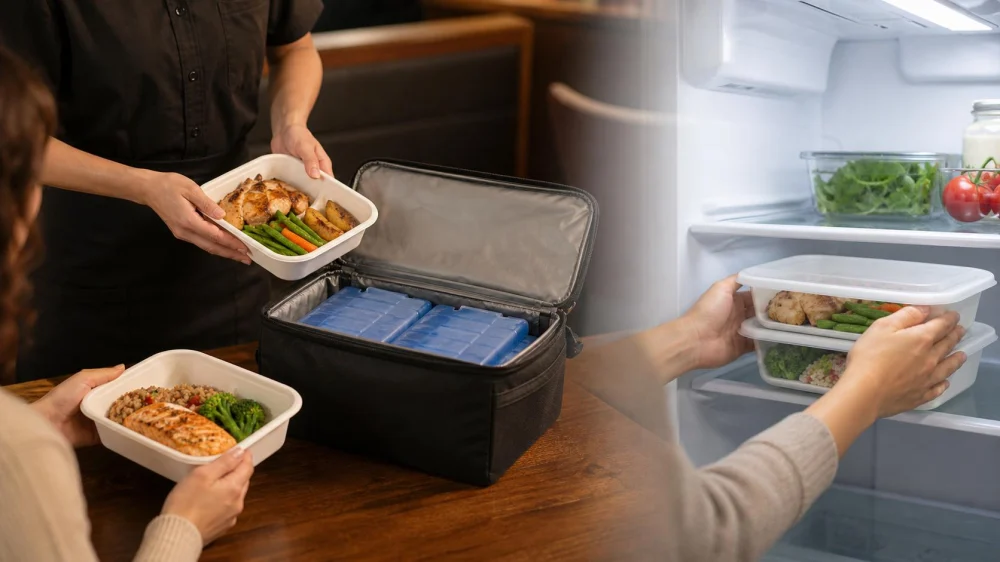
How to Take Restaurant Leftovers Home Safely
On this page
Quick answer
Refrigerate restaurant leftovers within two hours of being served, or within one hour when the surrounding temperature is above 90°F. Skip the take-home box if errands or travel will exceed that time unless you have an insulated cooler with enough ice or cold packs. At home, divide large portions into shallow covered containers, keep the refrigerator at 40°F or below, and reheat leftovers to 165°F.

Start the safety clock
The two-hour rule limits the total time perishable food spends without safe hot or cold holding. The clock does not restart when food enters a takeout container or an air-conditioned car.
Count time from serving and include the meal, table conversation, trip home, and stops. Above 90°F—including a hot vehicle or outdoor patio—the limit is one hour. If you cannot meet it, leave the leftovers.

Pack leftovers well
- Ask for a clean, food-safe, leak-resistant container.
- Separate cold items from hot items and sauces when practical.
- Do not combine fresh food with food that has been sitting on the table.
- Keep raw garnishes or partially cooked components separate from ready-to-eat food.
- Close containers securely and place them upright in a clean bag.
- For a very large portion, request multiple smaller containers so it can cool more quickly.
Transport them safely
Go directly home. The passenger compartment is usually better monitored than a hot trunk, but air conditioning does not turn a car into a refrigerator. For a longer trip, use an insulated cooler with sufficient frozen gel packs or ice around the food.
Keep the cooler closed and away from sun. Do not place leaking raw groceries over restaurant food. If safe temperature cannot be maintained or verified, do not save the meal for later.
Refrigerate promptly
- Set the refrigerator to 40°F (4°C) or below and verify it with an appliance thermometer.
- Transfer large, deep portions into shallow containers.
- Cover food and leave enough refrigerator space for cold air to circulate.
- Place containers where they will cool quickly, not in an overpacked door.
- Write the restaurant and refrigeration date on the container.
Hot food can go into the refrigerator; dividing it into smaller portions improves cooling. Do not leave it on the counter for hours to reach room temperature.
Storage time and labels
USDA guidance generally advises using properly refrigerated cooked leftovers within three to four days or freezing them. Some dishes, ingredients, vulnerable diners, or restaurant instructions may call for a shorter time.
Freezing pauses bacterial growth but does not make food safe after excessive room-temperature exposure. Freeze early in a suitable container and label the contents and date.
Reheat evenly
- Reheat cooked leftovers to 165°F (74°C), measured in several places with a food thermometer.
- Cover and rotate or stir microwave-heated food to reduce cold spots; allow standing time when directed.
- Bring soups, sauces, and gravies to a rolling boil according to USDA guidance.
- Reheat only the portion you plan to eat.
- Use microwave-safe or oven-safe containers; restaurant packaging is not automatically heat-safe.
Some foods are better eaten cold for quality, but only if they were cooked and chilled safely and are intended to be served that way.
When to discard
- The food exceeded the two-hour limit—or one-hour hot-weather limit.
- You do not know how long it was unrefrigerated.
- The container leaked, opened, or contacted raw food.
- The refrigerator was above 40°F for a prolonged unsafe period.
- Mould, unusual odour, bubbling, slime, or other spoilage appears.
- A public-health recall or restaurant warning applies.
Do not taste food to test safety. Some harmful bacteria or toxins do not change smell, taste, or appearance, and reheating cannot reliably rescue every mishandled food.
Take-home checklist
- I know when the food was served.
- I can refrigerate it within the applicable time limit.
- The container is clean, closed, and separated from raw food.
- I have a cold-packed cooler for longer transport.
- My refrigerator is at or below 40°F.
- I divided large portions and dated them.
- I will eat within three to four days or freeze sooner.
- I will reheat cooked leftovers to 165°F and discard uncertain food.
Limitations and important notes
This guide covers common perishable restaurant leftovers. Shelf-stable foods, raw seafood, partially cooked meat, special medical diets, and food prepared for infants or immunocompromised people may need different handling.
People at higher risk of severe foodborne illness—including pregnant people, young children, older adults, and those with weakened immunity—should follow clinician and FDA advice about higher-risk foods, not only time and temperature.
Frequently asked questions
Can I leave leftovers in the car while shopping?
Not safely without reliable cold holding. A car can exceed outdoor temperature quickly. Go home or use a properly packed cooler.
Should leftovers cool before refrigeration?
Do not leave them out for extended cooling. Divide large portions into shallow containers and refrigerate promptly.
Can I keep restaurant leftovers for a week?
USDA’s general refrigerated window is three to four days. Freeze earlier if you will not eat them in that period.
Does microwaving kill everything?
No. Microwaves can leave cold spots, and some toxins may persist after mishandling. Start with safely stored food and verify 165°F throughout.
Sources and evidence notes
Time, temperature, storage, and reheating rules follow the FDA’s cold-storage guidance and USDA’s leftovers guidance.
Next steps
Before ordering, estimate your travel time. Ask for smaller sealed containers, go directly home or use a cold-packed cooler, then divide, date, and refrigerate the food. Put a three-to-four-day use-or-freeze reminder where everyone sharing the refrigerator can see it.



 TAQUERIA MORALES0.0 (0 reviews)
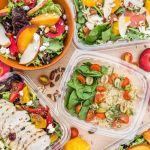 Proper Food4.0 (70 reviews)
 IZAKAYA SEASUN4.0 (196 reviews)
 Hasan Halal Chinese4.0 (62 reviews)
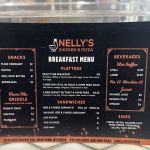 Nelly’s Chicken & Pizza4.0 (93 reviews)
 Pasta Villa Italian Restaurant & Pizzeria4.0 (396 reviews)
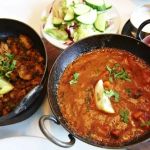 Best Indian Curry Houses in Major US Cities
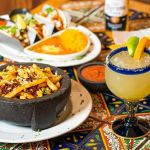 Discover the Best Latin American Restaurants That Will Surprise Your Taste Buds
 Top Fine Dining Restaurants With Seasonal Wine Pairing Menus
 From Street Eats to Fine Dining: Best Dessert Spots Across the US
 Steakhouse Tips, Trends, and Secrets You Need to Know
 Your Ultimate Guide to Food Trends in 2024: What’s Hot Right Now