
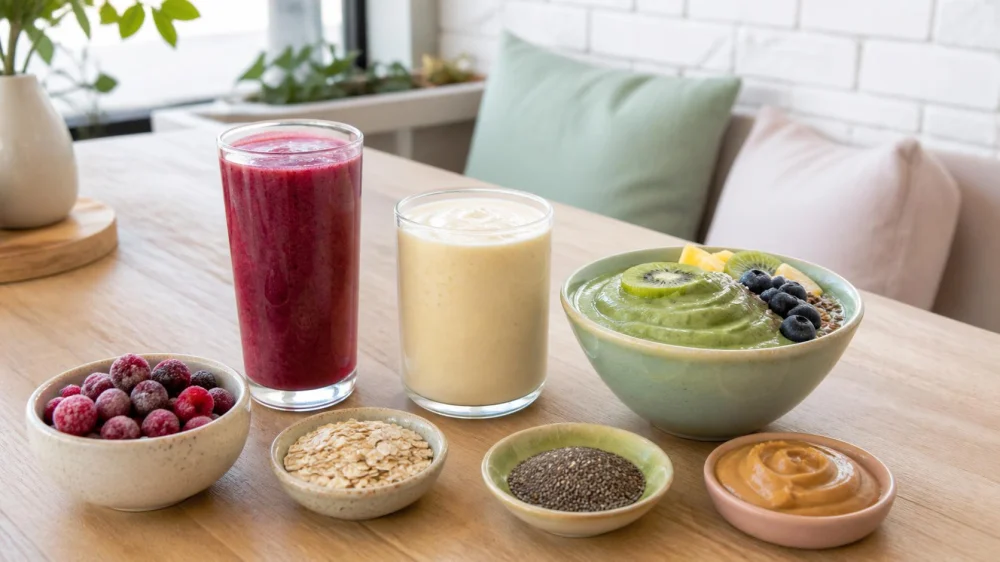
Brunch Smoothie Guide: Choose Base, Texture, and Add-Ons
On this page
- Quick answer
- Choose the liquid base
- Choose the texture you want
- Ask where sweetness comes from
- Treat add-ons as real ingredients
- Check allergens and cross-contact
- Compare portion and menu information
- Pair the smoothie with brunch
- Smoothie order checklist
- Frequently asked questions
- Sources and evidence notes
- Conclusion and next steps
Quick answer
Order a brunch smoothie by choosing four things in order: liquid base, fruit or vegetable profile, desired thickness, and optional add-ons. Ask whether the recipe uses juice, milk, yogurt, plant beverage, syrup, sweetened fruit, or a premixed base. Those details shape flavor, texture, allergens, and nutrition more than a colorful menu name does.
For a lighter, more refreshing drink, choose a thinner base and fewer dense additions. For a spoonable or meal-like texture, ask for yogurt, frozen fruit, oats, nut or seed butter, or another thickener that fits your needs. Portion and complete ingredient list still matter.

Bretts Deli - 6 1/2 Avenue Market
New YorkNew York CountyNew York
152 W 52nd St, Manhattan, NY 10019, USA
Choose the liquid base
Water and ice emphasize fruit and create a cleaner finish. Juice adds fruit flavor and sweetness but can make a blend thinner. Dairy milk brings creaminess and protein, while yogurt adds body and tang. Plant beverages vary widely in flavor, sweetness, protein, and allergens.
Ask which exact product is used. “Almond,” “oat,” “coconut,” and “soy” are not interchangeable, and some are sweetened or flavored. If the restaurant uses a premixed smoothie base, request its ingredient information rather than assuming it is only fruit.

Choose the texture you want
Frozen fruit and less liquid usually make a thicker blend. Fresh fruit, juice, and more liquid make it easier to sip. Banana, avocado, yogurt, oats, chia, and nut or seed butter can increase body, but each changes flavor and allergens.
Describe the result in plain language: thin and icy, smooth and pourable, thick but drinkable, or spoonable. Ask for one texture change at a time. Removing too much liquid can leave a blender unable to process the ingredients evenly.
Ask where sweetness comes from
Total sugars can come naturally from fruit and milk as well as from syrups, honey, sweetened yogurt, juice concentrate, flavored plant beverages, and other added ingredients. The FDA distinguishes naturally occurring sugars from added sugars on packaged-food labels.
If you want less added sweetness, ask whether syrup, honey, sweetened base, or flavored yogurt can be omitted. “No sugar added” does not mean sugar-free, and fruit-heavy smoothies can still taste very sweet. Taste preference and individual nutrition needs are different questions.
Treat add-ons as real ingredients
Protein powders, collagen, greens powders, nut or seed butters, oats, chia, flax, espresso, and supplement blends can substantially change taste, texture, allergens, caffeine, and cost. Ask for the brand or ingredient label when health, medication, pregnancy, sports testing, or allergy concerns apply.
More add-ons do not automatically make a smoothie more balanced. Choose each for a clear reason and avoid stacking products with overlapping caffeine, vitamins, herbs, or sweeteners. A registered dietitian or clinician can help with individual medical or performance needs.
Check allergens and cross-contact
Blenders, scoops, pitchers, and prep counters may be shared among dairy, nuts, peanuts, soy, sesame, and other ingredients. Tell staff about a food allergy before ordering and ask whether clean and sanitized equipment and a verified recipe can be used.
A rinse between drinks may not meet an allergy-safe process. If the restaurant cannot verify ingredients or controls, choose a factory-sealed alternative that fits your plan or do not order the smoothie.
Compare portion and menu information
Cup names such as regular or large do not reveal volume. Ask for ounces and whether the recipe changes proportionally. At restaurant chains covered by federal menu-labeling rules, calories appear for standard menu items and additional written nutrition information is available on request. Smaller or independent restaurants may provide information voluntarily.
FDA’s required additional restaurant information includes total sugars, but added sugars may not be separately listed for menu items. Ingredient labels for packaged components can help answer the added-sweetener question.
Pair the smoothie with brunch
Think about the rest of the meal. A thick smoothie with yogurt, oats, and nut butter may function more like a dish than a beverage. A small fruit-and-ice blend may pair more easily with eggs, toast, or another entrée.
If you are saving it for later, ask for safe storage guidance. Smoothies warm and separate quickly, and ingredients containing dairy or other perishable foods should not sit at room temperature for extended periods.
Smoothie order checklist
- Ask for the full base and ingredient list.
- Choose thin, pourable, thick, or spoonable texture.
- Identify syrups and other added sweeteners.
- Add powders or butters for a specific reason.
- Check caffeine and overlapping supplement blends.
- Disclose allergies and ask about shared blenders.
- Compare actual ounces and menu nutrition information.
- Match the portion to the rest of brunch.
Frequently asked questions
Does fruit make a smoothie “no added sugar”?
Not by itself. The recipe may also contain syrup, honey, sweetened yogurt, juice concentrate, or a sweetened base.
Which base is creamiest?
Yogurt, dairy milk, some plant beverages, banana, and avocado can add creaminess, with different flavors and allergens.
Can I request less ice?
Yes, but ask how it changes thickness and volume; the recipe may need more liquid or frozen fruit.
Are shared blenders safe for allergies?
They can create cross-contact. Ask about the restaurant’s cleaning, sanitizing, and separate-equipment procedure.
Are menu calories available everywhere?
No. Federal requirements generally cover chains with 20 or more qualifying locations; others may provide them voluntarily.
Is a green smoothie automatically healthier?
No. Color does not reveal ingredients, portion, sweetness, or how it fits your overall needs.
Sources and evidence notes
The FDA’s added sugars guide explains the difference between total and added sugars on packaged labels. Its menu-labeling overview explains calorie posting and written nutrition information at covered chain establishments.
Restaurant recipes and availability vary. Ingredient and nutrition questions should be checked with the actual establishment at the time of ordering.
Conclusion and next steps
Start with the base, specify texture, locate the sweetness, and choose add-ons intentionally. Ask for the complete ingredient and allergen process rather than trusting the menu name. Finally, compare the actual portion and decide whether the smoothie is the drink, a side, or most of the meal.





 Playa Bowls4.0 (209 reviews)
 Massey's Pizza Sports Bar & Wings4.0 (783 reviews)
 Song Bo Yuan3.0 (30 reviews)
 Crosby Deli & Grocery Inc2.0 (4 reviews)
 Pelham Diner and Grill4.0 (379 reviews)
 Little Caesars Pizza3.0 (105 reviews)
 Best Mediterranean Spots With Fresh Seafood: Top Destinations for Seafood Lovers
 Best Restaurants for Casual Date Nights: Cozy, Fun & Affordable Spots
 Best Brunch Spots With Bottomless Bellinis
 Best Chinese Restaurants With Authentic Szechuan Flavors in the US
 BYOB Restaurant Checklist: Corkage, Service, and Safety
 How to Order Like a Local at a Classic American Diner