
Dining Out With Food Allergies: A Safer Checklist
On this page
Quick answer
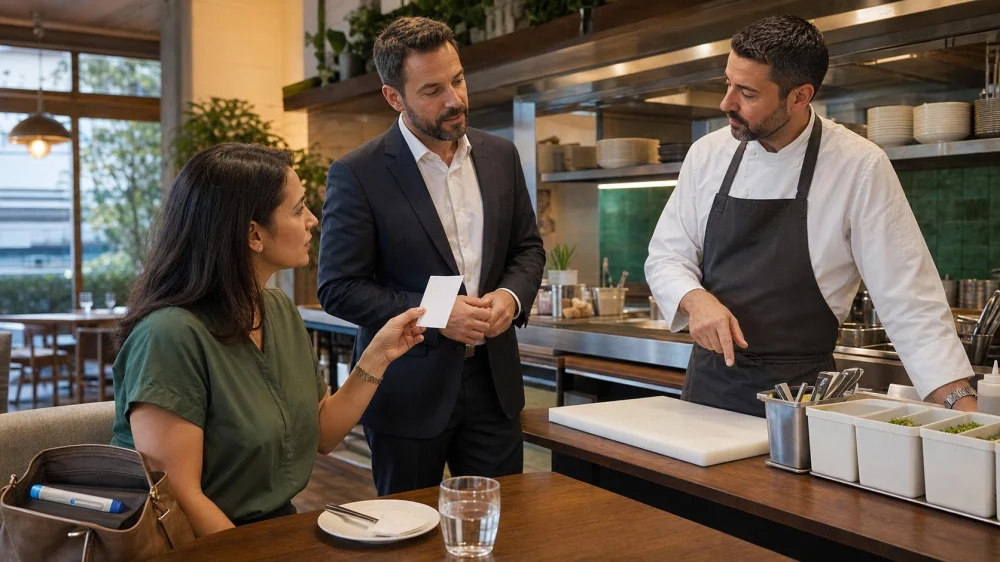
Call the restaurant before a busy service, name the exact allergen and severity, and ask whether staff can verify ingredients and prevent cross-contact on shared grills, fryers, utensils, and prep surfaces. Repeat the request to the server and manager, choose a simple dish, and carry prescribed emergency medicine. If answers are vague or procedures seem uncertain, do not eat there.
Allergen versus cross-contact
Allergen cross-contact is the unintended introduction of an allergen into food that was not meant to contain it. A dish can omit peanuts, milk, sesame, or another trigger as an ingredient yet contact the same fryer oil, grill, knife, blender, scoop, glove, or cutting board.
The nine U.S. major allergens are milk, egg, fish, crustacean shellfish, tree nuts, peanuts, wheat, soybeans, and sesame. People can react to other foods too, so use the precise medically diagnosed trigger rather than saying only “the major allergens.”

Before you go
- Review the menu for a few simple candidates, but do not treat online menus as current ingredient lists.
- Call outside peak hours and ask for a manager or kitchen lead.
- State the allergen, that this is a medical food allergy, and whether airborne or skin-contact concerns were included in your clinical plan.
- Ask about recipes, supplier labels, substitutions, shared equipment, and cleaning procedures.
- Choose a backup restaurant or bring safe food when appropriate and permitted.
- Carry prescribed epinephrine and other emergency supplies within their storage requirements; tell companions where they are.
Questions for the restaurant
- Can you check the current ingredient label or recipe with the kitchen?
- Is this item marinated, garnished, brushed, fried, or finished with a sauce not listed?
- Does it use a shared fryer, grill, griddle, toaster, wok, blender, mixer, or ice-cream scoop?
- Can staff use cleaned hands, fresh gloves, clean utensils, and a cleaned preparation area?
- Are allergen orders marked and communicated to every station?
- Could supplier substitutions or premade sauces change ingredients?
- Who will confirm the finished plate before service?
Menu words and hidden sources
Ask about pesto, tahini, aioli, batter, breading, broth, glaze, curry paste, mole, miso, Worcestershire-style sauces, spice blends, flavoured oils, desserts, and garnishes. Names alone do not reveal every ingredient.
“Vegan” may exclude milk and egg but does not mean free of nuts, sesame, soy, wheat, or cross-contact. “Gluten-free” addresses gluten, not all wheat allergy risks or other allergens. “Nut-free” may be used inconsistently; identify the specific peanut or tree nut.
Order clearly
Use a short statement: “I have a severe allergy to [food]. Please check ingredients and prevent cross-contact. Can the kitchen safely prepare this?” Ask the server to repeat the request and involve a manager when needed.
Prefer dishes with fewer components and no shared fryer when fryer cross-contact matters. Avoid buffets, communal dips, shared utensils, tableside grills, and bakery cases when staff cannot control transfer. When the plate arrives, confirm it before tasting.
When to choose another restaurant
- Staff dismiss the allergy as a preference.
- No one can verify recipes or supplier labels.
- The kitchen cannot separate the relevant shared equipment.
- Answers change among staff.
- The dish arrives with an allergen garnish simply removed.
- The restaurant is too busy to follow the promised process.
- You feel pressured to “try a little.”
Leaving is a reasonable safety decision, not a complaint about hospitality.
If a reaction occurs
Follow the emergency plan provided by your allergy clinician. Use prescribed epinephrine promptly for anaphylaxis as directed and call emergency services; do not rely on antihistamines to treat anaphylaxis or wait for symptoms to worsen. People who use epinephrine should still receive emergency medical care.
Tell restaurant staff, keep the dish and ingredient information when safe, and document time, foods, symptoms, and treatment for clinicians. Do not drive yourself during a serious reaction.
Dining checklist
- I named the exact allergen and medical risk.
- A knowledgeable person verified ingredients and substitutions.
- We discussed shared fryers, grills, tools, and prep surfaces.
- The allergy was communicated to the kitchen.
- I chose a simple confirmed dish and checked it on arrival.
- I have accessible, unexpired prescribed emergency medicine.
- My companion knows the response plan.
- I will leave if the process becomes uncertain.
Limitations and medical notes
No restaurant conversation can guarantee zero risk. Individual thresholds and emergency plans differ, and only a qualified clinician can diagnose an allergy, advise avoidance, and prescribe treatment. Do not intentionally test tolerance in a restaurant.
Packaged-food labeling rules do not make every restaurant menu a complete allergen label. Local food-code and disclosure requirements vary.
Frequently asked questions
Is a shared fryer safe?
It can transfer allergen proteins from breaded or other foods. Ask what shares the oil; if your plan requires avoidance and separation is unavailable, choose another item.
Can staff remove the allergen from a finished plate?
No. Removing a garnish does not undo contact. Request a newly prepared dish using the agreed controls.
Is “may contain” the same as “contains”?
They are different label statements, but people with allergies should follow clinician guidance and not assume advisory-labeled products are safe.
Should I bring an allergy card?
It can reinforce communication, especially when travelling or using another language, but it does not replace a direct conversation and confirmation.
Sources and evidence notes
Allergen definitions and cross-contact principles follow the FDA’s food allergy guidance and retail cross-contact research.
Next steps
Create a one-sentence allergy statement and a short list of equipment questions. Save your emergency plan and restaurant backup, then call before visiting. At the table, repeat the request, verify the finished plate, and choose safety over completing the meal when any answer changes.
 Mei Chung Mei4.0 (222 reviews)
 Crunchwerks4.0 (174 reviews)
 Bambolino's4.0 (661 reviews)
 Sabor A Mexico II4.0 (271 reviews)
 Two Fat Indians4.0 (82 reviews)
 Golden Star4.0 (350 reviews)
 Your Ultimate Guide to Memorable Dining Experiences
 Best Mexican Restaurants With Regional Dishes | Brunch & Snack Chat
 Top Asian Noodle Houses You Should Visit
 Best Restaurants: Tips, Trends, and Secrets to Enhance Your Dining Experience
 Best Lebanese Restaurants With Fresh Mezze
 Exploring Pizza Places Locals Swear By – The Best Local Pizzerias to Try