
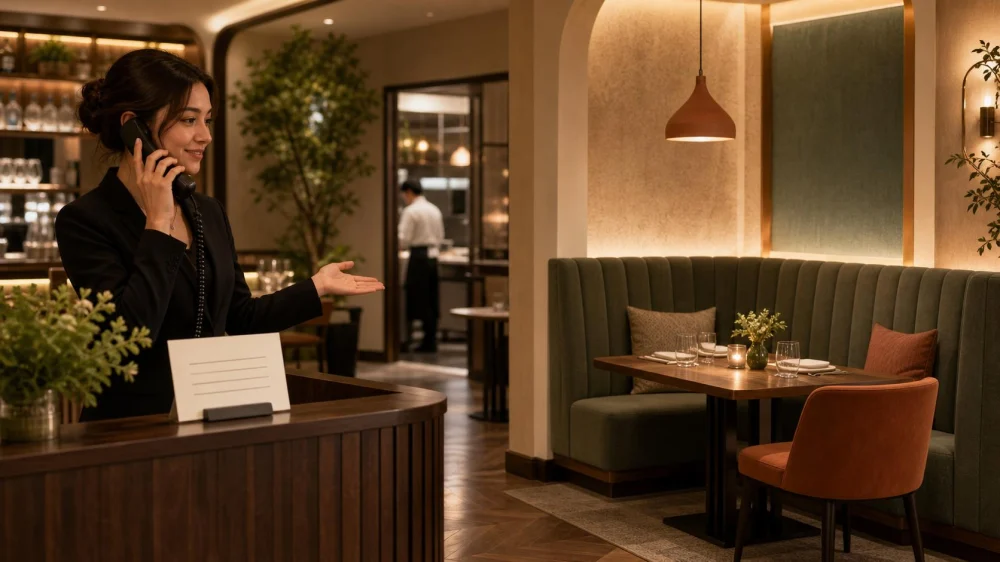
How to Request Quieter Restaurant Seating Before You Arrive
On this page
Quick answer
Contact the restaurant before a busy service and ask for a table away from speakers, bar seating, kitchen doors, restrooms, server stations, entrances, and large parties. Explain the most important need—hearing, conversation, sensory comfort, or accessibility—without demanding a specific table number. Ask about quieter times, patios, private rooms, booth acoustics, and whether the request can be noted but not guaranteed.
Restaurants cannot control every guest or sound. A precise preference plus a flexible time usually works better than asking only for “the quietest table.”
Define what quieter means for you
Identify the sound that matters most. Music volume, kitchen clatter, crowd conversation, chair movement, entry traffic, or an echoing room may affect people differently. Some booths reduce nearby conversation but make access or lip-reading harder.
Consider lighting, sightlines, aisle width, seating support, service-animal space, and proximity to an exit alongside noise. If the request relates to a disability, state the functional need and ask what reasonable options the restaurant can provide.
Choose timing and contact method
Call during a non-peak hour when staff can discuss the layout. For online reservations, use the notes field but follow up directly when the need is important. Confirm the date, time, party size, name, indoor or outdoor preference, and expected duration.
Ask which service periods are typically calmer. An early brunch, weekday meal, or time between rushes may be more predictable than a peak weekend seating, live-music night, or major local event.
Make a clear seating request
Use a short statement: “We need to hear each other easily. Could you note a table away from speakers and the service station?” Add only the next most important constraint, such as step-free access or room for a mobility device.
Ask whether the restaurant has separate dining areas, enclosed patios, private spaces with minimums, high-backed booths, or low-music sections. Confirm whether outdoor seating has traffic, weather, heaters, fans, or entertainment that changes the sound.
Confirm the plan on arrival
Arrive on time and remind the host politely before being seated. If the assigned table is unsuitable, describe the problem specifically and ask what alternatives are currently available. Moving may require a wait or a smaller table.
Once seated, reduce avoidable noise by placing phones on silent and asking companions to speak one at a time. Request music adjustment only through staff and understand that venue-wide volume may not be changeable.
Use a flexible backup plan
Choose in advance whether the group would wait, sit outdoors, accept a different table, order takeout, or go to another nearby restaurant. Keep essential hearing devices, communication cards, or sensory supports available and charged.
If conversation becomes difficult, ask for the check early or move dessert elsewhere. Avoid blaming staff for an unexpected loud group; focus on the practical option available now.
Quiet-seating checklist
- Name the specific sound or access concern.
- Choose a generally calmer time.
- Contact the restaurant before peak service.
- Request distance from key noise sources.
- Confirm indoor, outdoor, booth, and access tradeoffs.
- Ask that the preference be noted.
- Reconfirm politely on arrival.
- Keep a wait, takeout, or alternate-venue backup.
Limitations and courtesy notes
- A seating request is not automatically a reservation guarantee.
- Live music, equipment, traffic, guests, and staffing can change conditions.
- Outdoor seating may add traffic noise, weather, smoke, insects, or access issues.
- Private rooms may require fees or minimum spending.
- For disability accommodation questions, contact the restaurant directly and use current official guidance when legal rights are involved.
Frequently asked questions
Which restaurant tables are usually quieter?
Tables away from speakers, bars, kitchens, entrances, restrooms, and service stations may be quieter, but room acoustics vary.
Is a booth always best?
No. It may reduce nearby sound but can limit access, sightlines, seating flexibility, or device space.
Should I write the request in reservation notes?
Yes, but call when it is important. Notes can be missed or may not explain the functional need.
Can I ask the restaurant to lower the music?
You can ask politely, but staff may need to maintain a venue-wide setting or entertainment plan.
What if the table is still loud?
Ask about another available area, wait for a table, shorten the meal, use takeout, or move to the backup venue.
Sources and evidence notes
This planning method relies on hospitality communication principles: define the functional need, contact the venue early, acknowledge layout and operating limits, reconfirm on arrival, and keep a backup. The restaurant's current floor plan, event schedule, reservation policy, and accessibility process determine what is available.
Call with one specific preference
Choose the single sound source that matters most and call the restaurant outside peak service. Ask for a table away from that source, confirm one access requirement, and ask which reservation time offers the best chance of meeting the request.

 Portia's Cafe4.0 (1354 reviews)
 Chris cooks5.0 (6 reviews)
 Flo Bar & Grill 334.0 (7 reviews)
 Peacock Gourmet5.0 (19 reviews)
 Wing Hing3.0 (81 reviews)
 Chipotle Mexican Grill3.0 (741 reviews)
 Best Asian Fusion Restaurants with Innovative Dishes
 Exploring Local Eats That Are Hidden Gems
 Dessert Spots That Will Satisfy Every Craving
 How to Find Brunch Spots For an Unforgettable Experience
 11 Foodie Guides Where Every Bite Feels Like Heaven
 Exploring Budget Eats That Deliver on Flavor and Atmosphere