Brunch Pancake Styles: Choose Texture Before Toppings
On this page
Quick answer
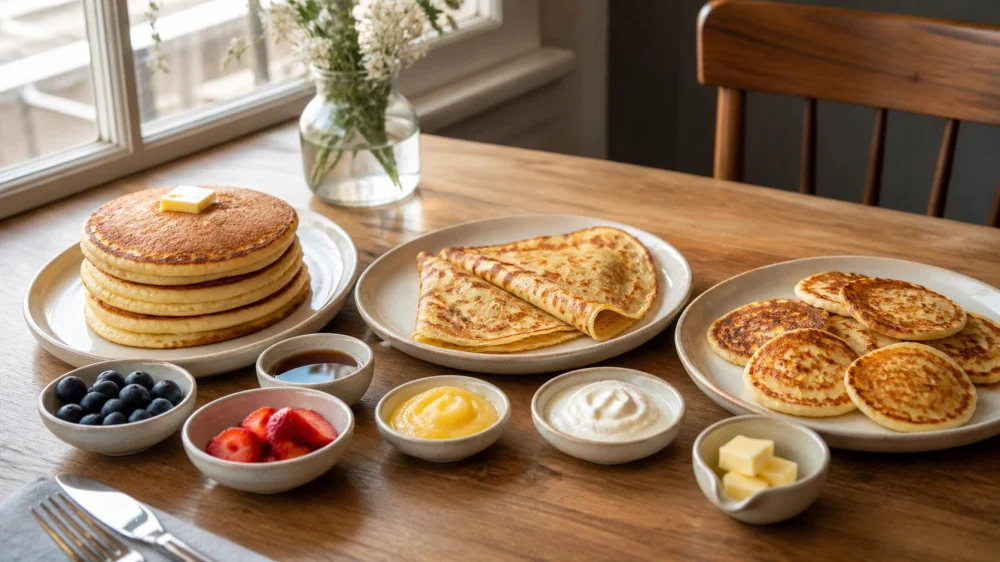
Choose brunch pancakes by the texture you want before deciding on syrup or toppings. Pick a thick, fluffy stack for a soft cake-like bite; thin pancakes for tender folds and filling; crisp-edged griddle cakes for browned contrast; small pancakes for easy sharing; or an oven-puffed pancake for a custardy center and dramatic rim. Restaurant names vary, so ask for a description.
This guide is for diners in the United States comparing pancake choices at brunch restaurants. It describes broad textures rather than authenticating regional or cultural recipes. Ingredients, sizes, cooking fats, garnishes, and menu names vary by kitchen.

A quick pancake texture map
| What you want | Look for | Ask about |
|---|---|---|
| Soft and tall | Thick, fluffy, buttermilk-style, soufflé-like | Stack height, center texture, cooking time |
| Thin and tender | Thin, folded, rolled, crêpe-like | Sweet or savory filling, number per order |
| Browned and crisp | Griddle cakes, crisp edges, lacy edges | Cooking fat, edge texture, sauce placement |
| Small and shareable | Mini or silver-dollar-size pancakes | Count, topping distribution, sharing plates |
| Custardy and oven-puffed | Skillet-baked or oven pancake | Wait time, center texture, pan temperature |
These labels overlap. A restaurant may use a familiar name for its own interpretation, and one kitchen’s “fluffy” pancake may be another kitchen’s medium-thick griddle cake. Texture words and preparation details are more reliable than the title alone.

Five useful style categories
Thick and fluffy stacks emphasize a soft interior and height. They suit diners who like a substantial, cake-like base that absorbs butter and syrup. Ask whether the center is airy or more tender and dense, and how many pancakes arrive. A tall stack can be more food than the plate photo suggests.
Thin and foldable pancakes put more attention on the filling or sauce. They may be served flat, folded, or rolled. Choose them when you want a tender wrapper around fruit, cream, chocolate, cheese, vegetables, or another filling. Ask whether the batter itself is sweet and whether the order contains one large piece or several.
Crisp-edged griddle cakes offer contrast between browned edges and a softer middle. The cooking surface and fat affect the crust. If crispness matters, request sauce on the side so the edges do not soften before you eat them.
Small-format pancakes provide more browned perimeter and easy fork-sized portions. They work well for children, tasting, or sharing, but “mini” does not establish the total portion. Confirm the count and whether toppings come on every piece or only over the stack.
Oven-puffed or skillet-baked pancakes are often served as one large piece with a raised edge and softer, egg-forward center. They may take longer because they are baked to order and can deflate naturally after leaving the oven. Choose this style for texture and presentation, not because you expect a conventional fluffy stack.
Whole-grain, cornmeal, oat, buckwheat, or other grain-forward versions can appear within several of these shapes. Grain choice may add nuttiness, earthiness, tenderness, or a coarser bite, but the name does not guarantee a particular nutrition profile or gluten status.
Questions to ask before ordering
- How thick are they? Compare with a regular house pancake rather than asking for an exact measurement.
- Are the centers fluffy, tender, chewy, or custardy? This separates styles that look similar in a menu photo.
- Are the edges soft or crisp? Ask whether sauce arrives on top or on the side.
- How many and how large? Count and diameter together give a better portion picture than either alone.
- What is included? Confirm butter, syrup, fruit, cream, nuts, sides, and garnishes.
- Is the batter flavored or filled? Lemon, spice, chocolate, fruit, cheese, and other additions change sweetness and texture.
- How long will it take? Tall or oven-baked styles may have a different preparation time than standard griddle pancakes.
- Can toppings come separately? This lets the diner control sweetness and preserve texture.
For a group, agree whether pancakes are the main dish or a shared sweet course. One order for the table may provide enough tasting without leaving each person with a heavy stack plus a savory entrée.
Match toppings to the pancake
For thick, absorbent pancakes: start with less liquid topping and add more as needed. Fruit compote, butter, syrup, and cream can quickly turn a fluffy interior heavy or soggy.
For thin pancakes: choose a filling that spreads easily and does not tear the wrapper. Ask whether fruit is fresh, cooked, or sauced and whether a filled pancake can be served less sweet.
For crisp edges: keep wet sauces on the side and use toppings with contrasting texture, such as fresh fruit or a small amount of cream. If nuts are involved, confirm allergy procedures.
For small pancakes: shared toppings let diners build different bites. Ask for extra plates and utensils before the food arrives if the table plans to divide them.
For oven-puffed pancakes: simple toppings help preserve the custardy center and browned rim. Heavy sauces may mask the texture that makes the style distinctive.
Sweet-and-savory combinations can work, but confirm the dish components. Bacon, sausage, cheese, smoked fish, eggs, fruit, syrup, and spicy sauces create very different meals, and some sides may be separately priced.
Dietary needs and ingredient checks
Standard pancake batter often contains wheat, milk, and egg, but recipes vary. Butter, shared griddles, toppings, fillings, powdered garnishes, and cooking sprays can introduce additional allergens or animal ingredients.
For a food allergy, state the specific allergen and ask the server to check the current recipe and cross-contact procedures with the kitchen. Do not assume that “gluten-free,” “vegan,” “dairy-free,” or another menu label answers every ingredient and shared-equipment question.
Buckwheat is a distinct plant from wheat, but a buckwheat pancake may still contain wheat flour or contact wheat on a shared griddle. Oat-based pancakes may use other flours. A grain name describes an ingredient emphasis, not the complete formula.
People with medical nutrition needs should follow guidance from their clinician and choose restaurants that can provide clear current information. If the kitchen cannot answer or manage the request, select a more predictable dish.
Menu language and limitations
This comparison uses broad restaurant texture categories to help diners choose; it is not a culinary taxonomy. Names such as hotcakes, griddle cakes, flapjacks, crêpes, silver-dollar pancakes, and oven pancakes can reflect regional traditions, restaurant branding, or specific recipes.
Only the restaurant can confirm the current batter, cooking method, portion, topping, price, and allergy procedure. Photos can make pancakes appear thicker or larger than they are. Ask for a verbal comparison with another menu item when size and texture matter.
Frequently asked questions
What makes a pancake fluffy?
Recipe, mixing, leavening, batter rest, heat, and thickness all influence the result. A menu cannot reveal the exact method, so ask how the restaurant describes the center texture.
Are thin pancakes the same as crêpes?
Some thin pancakes are crêpe-style, but cultural recipes and restaurant terms differ. Ask about thickness, sweetness, filling, and folding rather than relying only on the name.
Do crispy edges mean the pancake is overcooked?
Not necessarily. Some griddle styles intentionally develop browned, lacy, or crisp edges while keeping a tender center. Burnt bitterness or a dry center is a different result.
Are whole-grain pancakes always healthier?
No single menu word determines the complete nutrition profile. Portion, recipe, added sugar, fat, toppings, and individual needs matter. Ask for ingredient and nutrition information when the restaurant provides it.
Can I order pancakes less sweet?
Ask whether sugar is already in the batter and whether sweet toppings can come on the side. A filled or flavored batter may not be adjustable, but a simpler version may be available.
Which style is best for sharing?
Small pancakes or one large oven pancake can divide easily, but any style can be shared with extra plates. Confirm portion, cuttability, and topping placement before ordering.
Next steps
Decide whether you want fluffy, thin, crisp-edged, small, or oven-puffed pancakes. Ask about center texture, size, count, included toppings, cooking time, and dietary needs. Keep sauces separate when texture matters, compare the portion with the rest of the meal, and use the restaurant’s current description rather than assuming a menu name means the same thing everywhere.
 Subway2.0 (119 reviews)
 Lin's Fusion4.0 (2948 reviews)
 The Grey Dog - Union Square4.0 (1617 reviews)
 Bubble tea store5.0 (7 reviews)
 Court Street Grocers4.0 (263 reviews)
 Lakeside BBQ1.0 (1 reviews)
 Best Chinese Restaurants With Authentic Szechuan Flavors in the US
 Your Ultimate Guide to Food Trends: What's Hot in 2026
 Best Brunch Spots With Classic French Toast: Top Places to Enjoy the Ultimate Brunch Experience
 Food Trends That Are Totally Instagrammable: What You Need to Know
 Your Ultimate Guide to Ice Cream Shops
 Why Snack Ideas Locals Swear By | Top Local Snack Trends