
Brunch Potatoes: Compare Cuts, Crispness, and Sauces
On this page
Quick answer
Choose brunch potatoes by deciding whether you want a crisp exterior, a soft center, or a fork-friendly bite. Ask how they are cut, cooked, and seasoned, then choose sauce on the side when you want to protect crispness. Match a rich potato side with a simpler main dish, or choose lighter seasoning beside a saucy entrée.
Read the menu terms
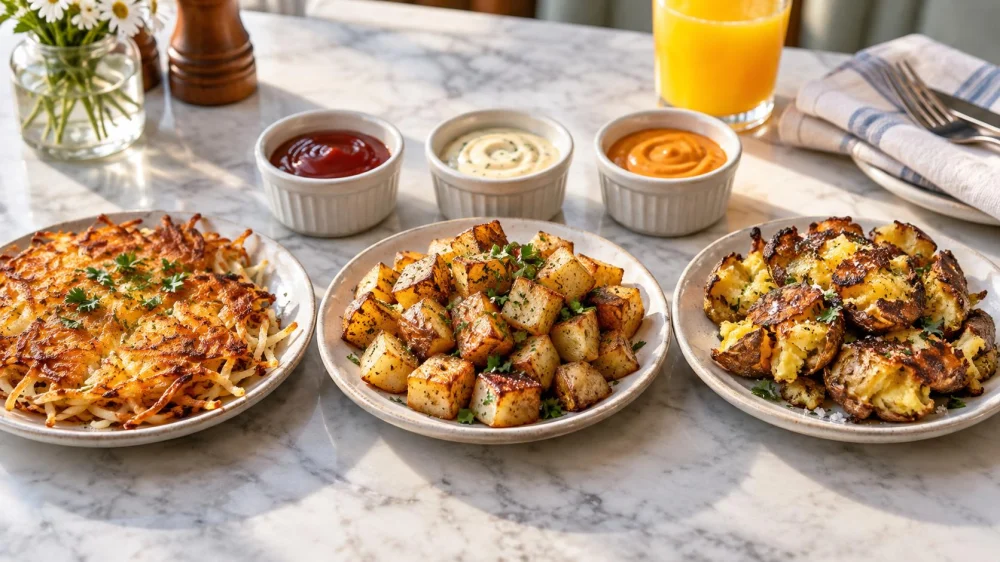
Brunch potatoes can mean several different dishes. Home fries are often cubed or sliced and cooked on a griddle or in a pan. Breakfast potatoes may be roasted, fried, or griddled with onions and peppers. Hash browns can be shredded into a crisp layer or formed into a patty. A menu name alone does not guarantee the cut or texture.
Look for preparation words such as roasted, fried, smashed, griddled, shredded, seasoned, loaded, or tossed. “Crispy” describes an intended result but does not tell you whether the center is fluffy, creamy, or thin. When texture matters, ask one focused question: “Are these shredded, cubed, or sliced?”

Compare common cuts
- Small cubes: more browned edges and an easy bite; best for diners who want seasoning across many surfaces.
- Large chunks or wedges: a thicker soft center and fewer crisp edges; useful beside a lighter main.
- Thin slices: broad browned surfaces that may soften where pieces overlap.
- Shredded potatoes: many fine crisp strands when cooked well, but steam and sauce can soften them quickly.
- Smashed potatoes: irregular edges with a creamy interior; often substantial enough to share.
No cut is automatically better. Small pieces favor edge-to-center contrast, while larger pieces emphasize the potato interior. Choose based on the eating experience you want and the rest of the plate.
Ask for the texture you want
For maximum crispness, ask whether the kitchen can serve sauce separately and avoid covering the potatoes with eggs or other moist items. Eat them early, while steam is still escaping. A deep bowl traps more steam than a wide plate.
If you prefer a softer bite, roasted chunks or potatoes finished with sauce may be a better match. Extra-crisp requests may take more time and may not be possible during a busy service. Ask politely rather than assuming the kitchen can change its batch preparation.
Takeout changes texture. Venting, travel time, and condensation can soften a crisp surface. If you are ordering to go, choose a style that remains enjoyable after a short trip or ask whether the restaurant packs sauce separately.
Match seasoning and sauce
Salt, pepper, herbs, smoked spices, garlic, cheese, onions, and peppers can turn a simple side into a strong flavor component. If the main dish already has a rich sauce or cured meat, plainly seasoned potatoes may give the plate better balance.
Ketchup, hot sauce, aioli, gravy, salsa, and herb sauces bring different levels of sweetness, heat, fat, and moisture. Sauce on the side lets you control both flavor and texture. For a shared order, confirm allergies and dietary needs before dipping from a common container.
Balance the whole brunch plate
Think of potatoes as one part of the meal. A heavy fried side beside a rich sandwich may feel repetitive, while crisp potatoes can add contrast to a soft egg dish. A fruit or vegetable side may provide a fresher counterpoint when the main is already starch-heavy.
For sharing, choose a larger cut that is easy to portion and request separate serving utensils. If several diners want different sauces, order them separately and keep allergy boundaries clear.
Important notes and limits
Recipes, portions, oils, fryers, and seasoning blends vary among U.S. restaurants. Ask staff for current ingredient and cross-contact information rather than inferring it from a dish name. “Gluten-free” ingredients do not guarantee a shared fryer is free from cross-contact.
Hot fried foods can retain heat inside even when the outside feels ready. Let children and anyone sensitive to heat test a small piece first. Refrigerate leftovers promptly according to current food-safety guidance and reheat only when appropriate.
Frequently asked questions
Are home fries the same as hash browns?
Usually not. Home fries are commonly cubed or sliced, while hash browns are often shredded or formed. Restaurants use names differently, so ask about the cut.
How can I keep brunch potatoes crisp?
Request sauce on the side, avoid covering them with moist toppings, and eat them early. For takeout, shorter travel and ventilation can help, but texture will still change.
What potato style is easiest to share?
Larger cubes, wedges, or smashed potatoes are often easier to portion than loose shreds. Ask for serving utensils and separate sauces.
Can I ask for extra crispy potatoes?
You can ask, but the restaurant may use a fixed batch process or need extra time. Confirm what the kitchen can reasonably do before ordering.
Sources and evidence notes
This guide uses common culinary principles: smaller cuts create more potential browning surface, trapped steam softens crisp foods, and sauce changes both texture and flavor. Restaurant recipes and food-safety controls vary, so staff and current public-health guidance are the right sources for specific ingredients and handling.
Next steps
Scan the menu for cut and cooking words, then ask one texture question. Choose the cut that fits your preferred bite, decide whether sauce should stay on the side, and balance the side with the main dish. For allergies, confirm ingredients and cross-contact before placing the order.

 Church's Texas Chicken3.0 (573 reviews)
 Taqueria el costeñito5.0 (4 reviews)
 Tropical Refresqueria4.0 (100 reviews)
 Flipp'N Chickens5.0 (6 reviews)
 No Toques Mi Taco4.0 (146 reviews)
 Barbecue Inn4.0 (1645 reviews)
 Quiet Brunch Planning: Seating, Timing, and Conversation
 Brunch Potatoes: Compare Cuts, Crispness, and Sauces
 Brunch Mocktail Order: Ingredients, Ice, and Garnish
 Brunch Coffee Order: Roast, Milk, and Meal Timing
 Brunch Buffet Choices: Allergies, Temperature, and Pace
 Brunch Waitlist Plan: Arrival, Party Size, and Updates