
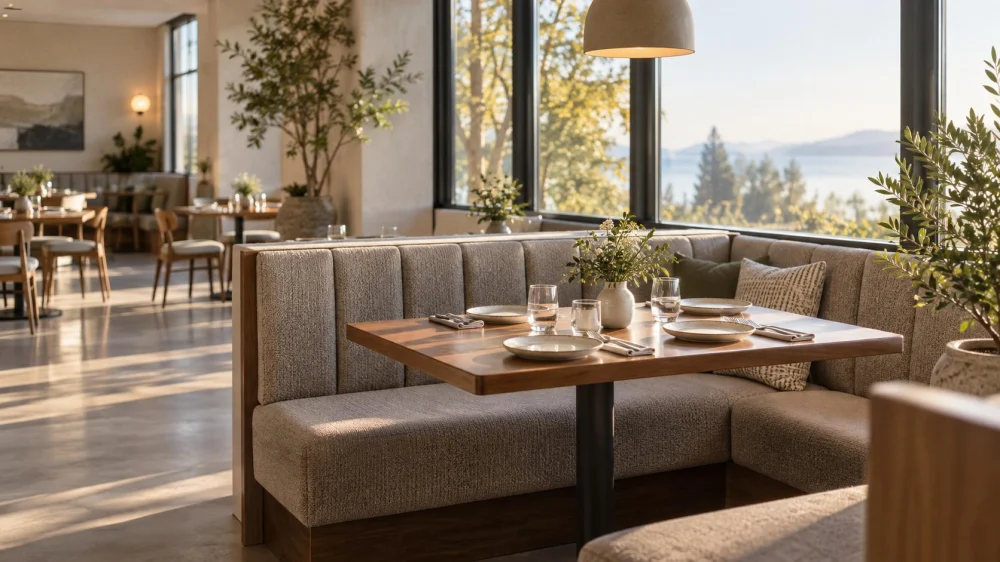
Quiet Brunch Planning: Seating, Timing, and Conversation
On this page
Quick answer
For a quieter brunch, define your group's needs, call the restaurant about typical noise and seating, and choose a less busy time rather than relying on photos or reviews alone. Request a booth, wall-side table, patio, or space away from speakers and service stations, while recognizing that the restaurant cannot guarantee who arrives or how busy it becomes.
Define what quiet means for your group
A conversation-friendly restaurant is one where the group can hear comfortably without competing constantly with music, kitchen noise, or nearby tables. The right level differs for a casual catch-up, a business discussion, an older adult with hearing difficulty, a sensory-sensitive diner, or a family with a sleeping baby.
Before choosing a place, agree on the main need. Is the goal low music, fewer crowds, distance from children, minimal echo, outdoor air, visual calm, or enough time without feeling rushed? One clear priority helps staff suggest a realistic seat.

Research the room, not only the menu
- Photos: look for hard floors, high ceilings, closely spaced tables, open kitchens, speakers, patios, booths, and upholstered surfaces.
- Recent reviews: use them as clues, not guarantees. Note the day and time described.
- Restaurant contact: ask when the room is usually calmer and which section is furthest from music or service traffic.
- Reservation options: check whether seating requests can be noted and whether patio or booth seating is first-come.
- Accessibility: ask about step-free routes, accessible seating, lighting, and other specific needs directly.
A “quiet” label in a review may reflect an early weekday visit, while a live-music brunch or peak Sunday service can feel completely different. Current restaurant information is more useful than a generic rating.
Choose a lower-pressure time
Ask the restaurant which periods are typically busiest. An opening-time reservation, a later meal after the main rush, or a weekday may offer more space and easier conversation. Do not assume the same pattern applies everywhere; local events, holidays, sports, weather, and staffing can change demand.
Arrive together and on time so the host can use the requested table efficiently. If the group will be late or smaller than booked, update the restaurant. A quieter table request is easier to honor when staff have accurate party information.
Request a conversation-friendly seat
Use a specific, polite request: “We are hoping to talk comfortably; if possible, could we sit away from speakers and the service station?” A booth or wall-side table may reduce traffic on one side. A patio may feel calmer, but street noise, weather, heaters, and neighboring tables still matter.
Seats near the host stand, kitchen pass, bar equipment, dish station, restroom route, or entrance often have more movement. Corners can reduce traffic but may also have poor lighting or limited accessibility. Ask about the tradeoff that matters to your group.
Restaurants cannot promise a silent room or hold an unsuitable table indefinitely. Treat the request as a preference unless staff confirm an accommodation or reservation detail.
Keep the meal comfortable
- Seat the person who needs clearer sound where they can see the other diners' faces.
- Keep phones and table audio silent; do not add competing sound.
- Order in a clear sequence so the server does not need to repeat details over background noise.
- If the assigned area is unexpectedly loud, ask early whether another available table is possible.
- If moving is not possible, shorten the meal or continue the conversation in a quieter public place afterward.
Speak at a comfortable level rather than escalating volume across the whole table. A smaller party and compact seating arrangement can make conversation easier than one long table.
Important notes and limits
This is general dining-planning guidance for the United States. It does not evaluate a restaurant's actual accessibility, noise level, or accommodations. Conditions change, and only the restaurant can describe its current layout and service plan.
People who use hearing aids, communication devices, or other accommodations may have individual needs. Contact the restaurant directly, state the functional need, and ask what is available. For a formal business, legal, medical, or confidential conversation, a public restaurant may not provide sufficient privacy even when it is quiet.
Frequently asked questions
What brunch time is usually quietest?
There is no universal time. Opening, late brunch, or weekdays may be calmer, but ask the specific restaurant because local patterns and events vary.
Are patios always quieter than dining rooms?
No. Traffic, wind, music, neighboring tables, and outdoor events can make a patio louder. Ask about the location and current conditions.
Can a restaurant guarantee a booth?
Some accept seating preferences but do not guarantee them. Confirm the policy and be prepared for an alternative that meets the same need.
Should I mention hearing or sensory needs?
Share enough information to explain the functional request, such as distance from speakers or reduced glare. You do not need to provide unrelated personal details.
Sources and evidence notes
This plan uses practical local-discovery criteria: current hours, layout, typical demand, music, table spacing, accessibility, and direct confirmation. Reviews and photos are secondary clues because they capture one visit and may become outdated.
Next steps
Choose the group's main comfort need, shortlist restaurants with suitable layouts, and call with one specific seating and timing question. Add the request to the reservation, arrive on time, and decide in advance whether you would rather wait, move, or choose another place if the room is unexpectedly loud.


 Church's Texas Chicken3.0 (573 reviews)
 Taqueria el costeñito5.0 (4 reviews)
 Tropical Refresqueria4.0 (100 reviews)
 Flipp'N Chickens5.0 (6 reviews)
 No Toques Mi Taco4.0 (146 reviews)
 Barbecue Inn4.0 (1645 reviews)
 Quiet Brunch Planning: Seating, Timing, and Conversation
 Brunch Potatoes: Compare Cuts, Crispness, and Sauces
 Brunch Mocktail Order: Ingredients, Ice, and Garnish
 Brunch Coffee Order: Roast, Milk, and Meal Timing
 Brunch Buffet Choices: Allergies, Temperature, and Pace
 Brunch Waitlist Plan: Arrival, Party Size, and Updates